
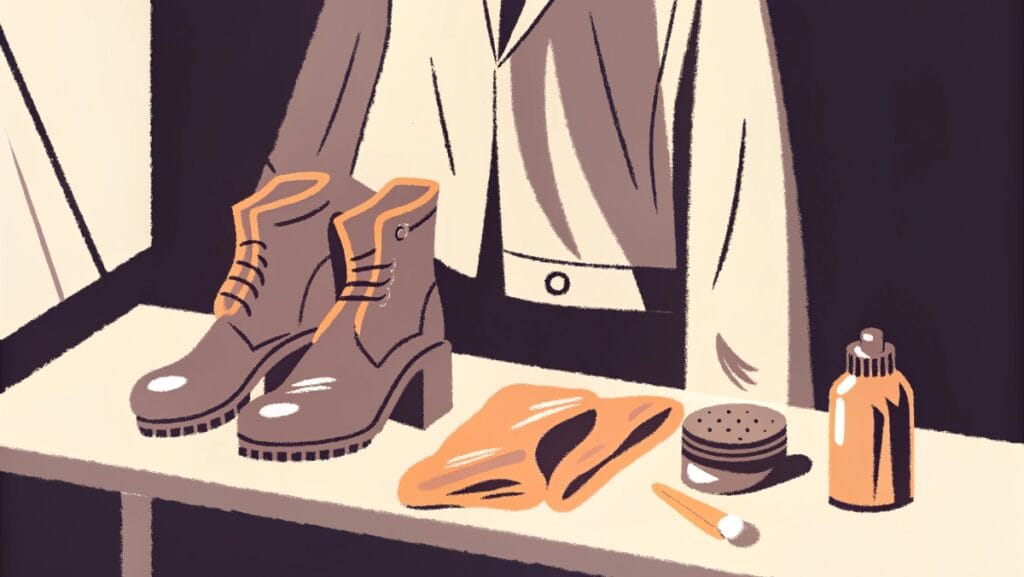
Natural leather is one of the noblest materials used to make shoes, bags, jackets, and accessories. It breathes, develops a distinctive patina over time, and can last for decades when treated with care. But that “when” is exactly where most leather owners stumble: improper leather care at home can turn an expensive item into a cracked, faded, and misshapen one in a single season.
In this article, we’ve gathered practical tips from professional leather craftsmen on how to care for leather goods so they keep their look and function for as long as possible. You’ll learn how to clean leather items without damaging the material, which products actually work and which ones only strip the leather’s structure, and what to do if a piece has already suffered from moisture, stains, or age.
Investing in quality items starts with choosing the right maker. Today, buying Ukrainian-made shoes or accessories isn’t just about style — it’s also about supporting local business and getting access to high-quality materials that, with proper care, will outlast most mass-produced factory goods.
Why Leather Care Isn’t a Luxury — It’s a Necessity
Leather is an organic material that keeps “living” even after it becomes part of a shoe or bag. Its fibers hold natural oils and fats that keep the material flexible. Over time, exposed to air, sunlight, moisture, and friction, these oils evaporate, and the leather begins to crack, dull, and become brittle.
Regular leather care at home solves several problems at once:
- Restores the material’s natural moisture balance.
- Protects the surface from dirt, dust, and micro-scratches.
- Prevents premature cracking and warping.
- Preserves the item’s appearance — its color, shine, and texture.
- Extends the product’s lifespan several times over.
Leather repair specialists often say that leather doesn’t tolerate extremes. It handles excessive dryness and excessive moisture equally poorly, which is why balance is the guiding principle of any care routine.
Leather Care Products: What Every Home Should Have
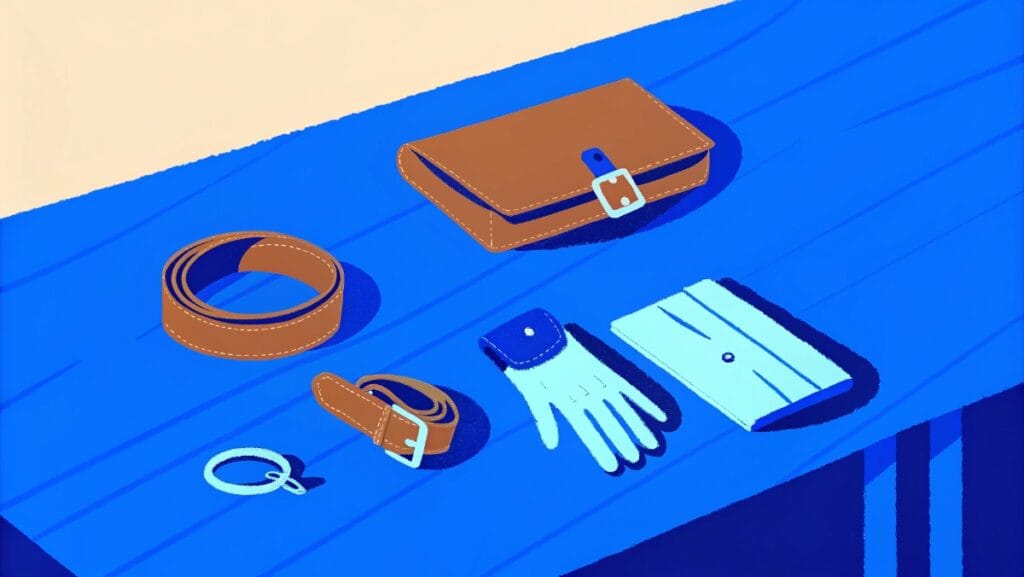
Before diving into specific techniques, let’s look at which leather care products belong in the toolkit of anyone who values their belongings.
The Basic Kit
- A soft natural-bristle brush — for removing dust and surface dirt without damaging the texture.
- Microfiber cloths — for buffing and applying products.
- Neutral soap or a specialized leather shampoo — for gentle cleaning.
- Leather cream or wax — nourishes the material and restores shine.
- Leather conditioner (balm) — deeply hydrates and restores elasticity.
- Water-repellent spray — creates a protective barrier against moisture.
- A stain remover suited to the specific type of leather.
It’s important to test any new product on an inconspicuous area first — for example, on the inside of the item or a spot that isn’t visible. This lets you confirm the product won’t alter the color or leave marks.
What to Avoid
Craftsmen unanimously warn against household chemicals meant for other materials. Dish soap, rubbing alcohol, acetone, and harsh solvents break down leather’s protective top layer and cause it to dry out. Likewise, never dry leather items on a radiator or in direct sunlight — high heat pulls moisture out of the material too quickly, leaving the leather stiff and prone to cracking.
How to Clean Leather Items: A Step-by-Step Guide
The foundation of any care routine is regular, correct cleaning. Here’s a universal method that works for most smooth leather goods.
Step 1. Remove dust and surface dirt
Go over the entire surface with a soft dry brush or cloth, paying attention to seams, pockets, and textured areas where dust tends to build up.
Step 2. Damp cleaning
Dampen a soft cloth with room-temperature water, wring it out lightly, and wipe the surface in circular motions. For stubborn dirt, add a small amount of neutral soap or a specialized leather shampoo.
Step 3. Remove any cleaning residue
Wipe the surface with a clean, damp, soap-free cloth so no film is left behind — residue can later cause staining or discoloration.
Step 4. Let it air-dry naturally
Allow the item to dry away from radiators, heaters, and direct sunlight. For shoes, use shoe trees or simply stuff them with rolled paper to help hold their shape.
Step 5. Nourish the leather
Once fully dry, apply a thin layer of leather cream or conditioner, let it absorb for 15-20 minutes, then buff away any excess with a soft cloth.
This routine is the baseline, and it’s worth repeating every three to four weeks for items in regular use — whether that’s shoes, a bag, or a jacket.
How to Protect Leather Shoes from Moisture
Shoes suffer from moisture more than any other leather item, since they’re in daily contact with rain, snow, puddles, and road salt. A few key rules help minimize the damage.
First, before the rainy or snowy season begins, new shoes should always be treated with a water-repellent spray. Apply it to a clean, dry surface from about 20-25 cm away in an even coat, and let it dry fully for several hours before wearing.
Second, this treatment should be repeated every two to three weeks during heavy use in cold weather, since the protective layer gradually wears off from friction and contact with de-icing chemicals.
Third, if shoes do get soaked, don’t dry them near a heat source. The best approach is to stuff them with paper — it absorbs moisture from the inside — and let them dry at room temperature, changing the paper every few hours during the first day or two.
Once fully dry, soaked shoes should always be treated with a nourishing cream — water strips leather of its natural oils, and without replenishing them, the material will quickly start to crack.
How to Remove Stains from Leather: Methods for Different Marks
Leather stains come from various sources, and there’s no single fix that works for all of them. Here are the most common situations.
Grease stains
Act quickly: sprinkle the stain with cornstarch or talcum powder and leave it for a few hours — the powder will absorb part of the grease. Afterward, gently brush away the residue with a soft brush.
Ink stains
Specialized leather stain removers, sold in shoe-care stores, work best here. Home remedies like alcohol or acetone can permanently damage the leather’s color.
Salt marks from de-icing chemicals
Mix a small amount of vinegar with water (roughly one part vinegar to three parts water), dampen a soft cloth with the solution, and gently wipe the affected area. Dry it immediately afterward and apply a nourishing cream.
Rain spots on suede or nubuck
For these materials, use a specialized rubber eraser or a stiff-bristled brush designed specifically for napped surfaces.
In every case, the same rule applies: the faster you respond to a stain, the better your chances of removing it completely, without leaving marks or discoloration behind.
What to Use on a Leather Jacket: Nourishing Outerwear
A leather jacket takes on considerable wear — it’s in constant contact with skin, clothing, bags, and seatbelts. That’s why nourishment matters even more for jackets.
Cream-based products or specialized conditioning balms work best here, since they penetrate the material’s structure more deeply than wax-based products (wax is better suited to shoes, where it forms a denser protective layer).
Apply the product in circular motions with a soft cloth, in small amounts, spreading it evenly across the whole surface — including the sleeves and collar, since these areas dry out the fastest. After application, let the jacket “rest” for at least a day before wearing it, so the product can fully absorb.
How often you need to repeat this depends on how often the jacket is worn: for jackets used daily during cold weather, repeat the process every month to six weeks. For jackets worn less often, two to three times a season is enough.
Cleaning a Leather Bag: Special Considerations
Bags have their own care requirements due to their hardware, linings, and compartments. Here are a few practical recommendations.
Before cleaning, empty the bag completely and turn the lining inside out if the design allows — this makes it easier to remove dust and debris from corners and seams. Metal hardware (clasps, zippers, chains) should be wiped separately with a dry cloth, avoiding moisture, to prevent tarnishing or corrosion.
For cleaning the leather surface itself, use the same universal routine: dry brushing, damp cleaning with a soft cloth and a minimal amount of neutral soap, natural air-drying, and a finishing layer of cream.
Pay special attention to the bottom of the bag and the handles — these parts are in constant contact with surfaces (tables, floors, car seats) and wear out the fastest. Handles in particular benefit from more frequent conditioning, since they bear the brunt of handling and contact with hands.
If a bag won’t be used for a while, store it in a cotton dust bag, stuffed with paper to help it hold its shape, in a dry, ventilated spot — away from plastic bags, which trap moisture and can lead to mold.
Protecting Leather from Drying Out: Prevention Over Cure
Drying out is one of the most common causes of premature wear in leather goods. It shows up as fine cracks, loss of flexibility, and a dull, “grayed” surface.
The main factors that speed up drying include:
- Prolonged exposure to direct sunlight.
- Storage near heating appliances.
- Frequent time spent in overly dry environments (for example, near an air conditioner in winter).
- Skipping regular conditioning with cream or balm.
- Contact with harsh cleaning agents.
Preventing leather from drying out is far simpler and cheaper than restoring material that’s already damaged. A few habits go a long way: keep items away from heat sources, avoid long exposure to sunlight, apply nourishing products regularly even before dryness becomes visible, and let items “rest” — don’t wear the same piece every single day without a break.
How to Restore a Leather Item: At-Home Repair
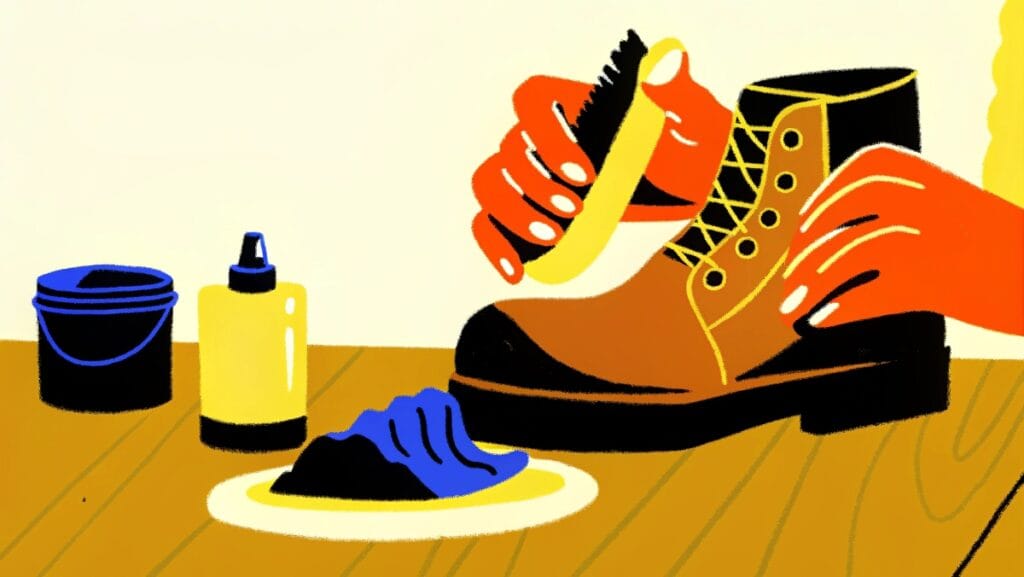
If leather has already lost its elasticity, developed fine cracks, or faded, that’s not necessarily a reason to give up on a favorite item. Here are a few tested restoration methods.
Deep conditioning
Apply leather conditioner in several thin layers, spaced a few hours apart, letting each layer fully absorb before applying the next. This gradually restores flexibility, even in badly dried-out material.
Buffing
For smooth leather, a polishing wax applied after conditioning can fill in fine scratches and even out the shine.
Color restoration
For worn spots or faded areas, specialized leather recoloring creams are available, matched to the item’s specific shade. Always test on a hidden area first.
Smoothing out creases
Minor creases in bags or jackets can be softened by gently warming the area with a hairdryer on the lowest setting from about 20-30 cm away, then smoothing it out by hand and applying a nourishing product right after.
For more serious damage — deep cracks, torn seams, or a warped sole — it’s best to consult a professional craftsman, since at-home methods in these cases only mask the problem temporarily rather than solving it.
Caring for Different Types of Leather: One Size Doesn’t Fit All
It’s important to understand that care methods vary depending on the type of leather.
Smooth (polished) leather is the easiest to maintain — it works well with most creams and waxes and tolerates damp cleaning without issue.
Suede and nubuck are napped materials that don’t tolerate water or cream-based products at all. For these, use specialized protective sprays, stain-lifting erasers, and stiff brushes to lift the nap back up.
Patent leather has a thin polymer coating that’s sensitive to temperature swings and harsh solvents. A soft damp cloth without soap is enough for cleaning, and specialized patent-leather sprays help restore shine.
Faux (synthetic) leather requires a different approach despite its name: it doesn’t need oil-based creams since it has no pores, but it’s sensitive to high heat, so these items should never be dried near a radiator.
Understanding exactly which type of leather you’re dealing with is the first step toward proper care. Using the wrong product often does more harm than no care at all.
Common Leather Care Mistakes
Even with the best intentions, it’s easy to make mistakes that end up costing more than professional restoration. Here are the most frequent ones:
- Drying leather near a radiator or heater — leads to instant drying out and cracking.
- Using generic household cleaners instead of specialized leather care products.
- Applying too much cream at once — leather can’t absorb that much in one go, and the excess leaves a sticky film that attracts dust.
- Skipping a patch test on an inconspicuous area before full application.
- Storing items in plastic bags, which trap moisture and encourage mold.
- Skipping preventive water-repellent treatment before the rainy or snowy season.
Avoiding these mistakes is already half the battle when it comes to keeping leather goods in great shape for years.
How to Choose a Quality Leather Item from the Start
Proper care extends the life of an item, but durability starts with the choice you make when buying it. If you’re planning to add to your wardrobe, take a look at what Ukrainian leather accessory makers have to offer. Our site features some of the best local brands, ones that care about the longevity of their products and source quality materials from trusted leather suppliers.
What to look for when choosing:
- Smell. Natural leather has a distinct, slightly earthy scent, without any chemical undertone.
- Grain and texture. Quality leather shows visible natural pores, unlike the uniform surface of synthetic materials.
- Elasticity. When gently pressed, natural leather springs back to its original shape, leaving only a faint mark that fades quickly.
- Stitching and hardware. Good local brands typically pay close attention to detail — even stitching, sturdy clasps, and reliable zippers.
Choosing local makers has an added benefit: it’s often easier to get guidance on the specific type of leather used and care recommendations tailored to that exact item, since the brand knows its own materials best.
FAQ: Answers to Common Questions
Final Thoughts
Proper care extends the life of your belongings, but it all starts with a quality foundation. Browse our catalog to find quality Ukrainian-made leather shoes that will serve you for more than one season.
Consistency is the guiding principle of leather care. A few minutes of attention each week — cleaning, conditioning, protecting against moisture — can keep a favorite jacket, bag, or pair of shoes looking flawless for years. And if you value not just quality materials but also support for local production, ordering shoes from a Ukrainian brand has never been easier — just browse the catalog of trusted workshops that work with natural leather through a full production cycle.
Remember: leather is alive, and how you treat it today determines how it will look five or ten years from now.