
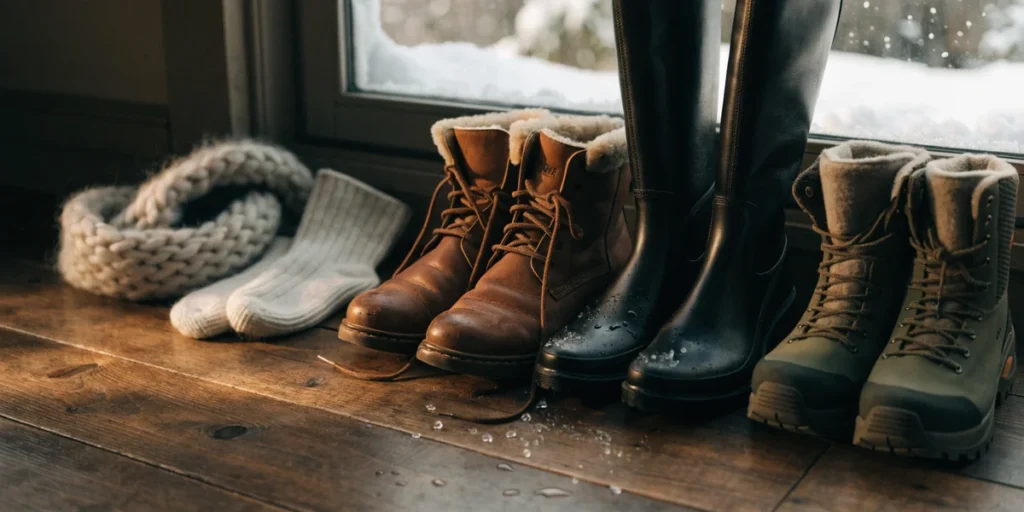
The cold season tests footwear harder than any other. In summer you can put up with small flaws, but in winter they turn into soaked socks, cold toes, and slipping at every step. That is why how to choose winter shoes that will not let you down on the first wet thaw is a question worth answering before you buy, not after.
In this guide, we explain how autumn shoes differ from winter ones, how to read a product description, what to look for in insulation and outsoles, and what to consider when you choose shoes from a Ukrainian manufacturer. It is useful for women and men, for anyone who needs a pair for the everyday city, and for anyone who spends more time outside it.
Autumn, Winter, Thaw: How Footwear Differs by Season
The first step is to understand the conditions you will walk in. Ukrainian winter is not one thing: in big cities it is most often damp, with road salt and wet snow, while in the foothills or the countryside it is snowy and frosty. That decides which model to pick.
Autumn shoes should above all protect against rain and puddles. A waterproof upper and an outsole that does not slip on wet leaves matter more here than heavy insulation. A winter pair, on the other hand, has to hold warmth at below-freezing temperatures and not stiffen in the cold.
A practical tip: go by the temperature range the maker states. If there is none, the pair is most likely built for mild weather. For a damp city winter that swings from +3 to −10 °C, one model will do; for steady frost, you need another.
How to Choose Winter Boots: Five Key Criteria
To avoid getting lost in descriptions, check five points. They decide whether you will be comfortable, dry, and safe, and they apply when you work out how to choose winter boots for any use.
- Insulation. Natural fur, wool, or modern thermal materials. What matters is not only the thickness of the layer but also whether the material lets your foot breathe.
- Upper. Dense leather with waterproofing, nubuck, or membrane fabrics. They protect against moisture and wind.
- Outsole. Rubber with a deep tread that does not harden in the cold.
- Tongue and lacing. A gusseted tongue keeps water and snow out.
- Size and last. The foot should fit snugly but freely: with room for a sock and no heel slip.
If two or three of these points are missing from the description, ask the seller. Good makers answer specifically and do not hide behind general phrases about “quality materials.”
Insulated Shoes: Fur, Wool, or Thermal Materials
Warmth depends on the insulation, but the choice is not obvious. Each option has its strengths and weaknesses.
- Natural fur. Very warm, breathable, and works well in hard frost. It needs care: it dislikes prolonged soaking.
- Wool. Soft, pleasant, and warm, with good moisture regulation. It suits a city winter without extreme frost.
- Thermal materials. Lighter and quicker to dry. Useful when you need steady performance in changing conditions.
Insulated shoes should be tried on with the socks you plan to wear. A thick sock in a tight boot will not warm you; it will squeeze your foot and restrict circulation. Warmth comes from air between the fibers, not from pressure.
One more detail: watch the layers. The insole, lining, and insulation must work together. If the insole is thin, your foot gets cold from below even when the upper is well insulated.
Waterproof Shoes: Membrane, Treatment, or Rubber
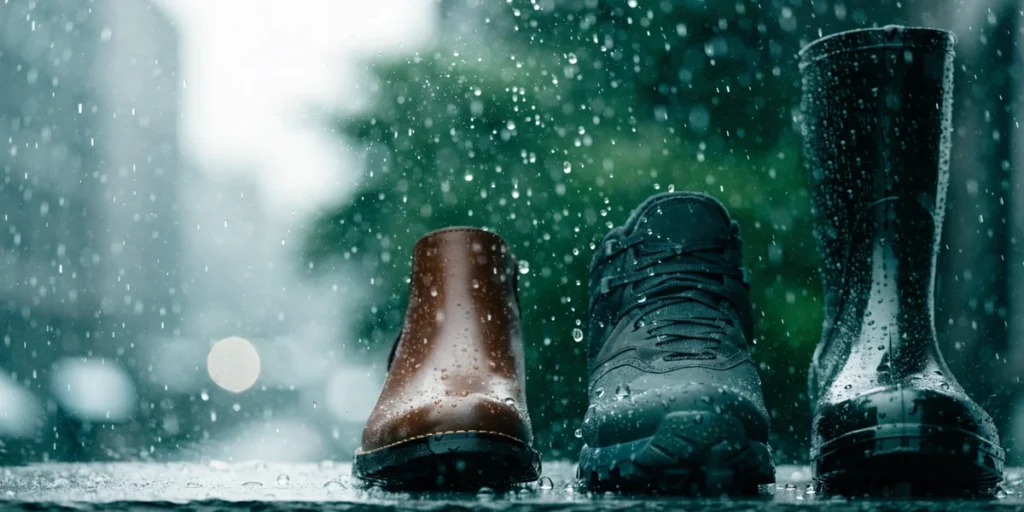
Water is the main enemy in winter. A soaked pair loses both warmth and shape, so waterproof shoes deserve careful selection. There are three main approaches.
- Leather treatment. A dense leather upper treated with a water-repellent compound. It sheds drops but needs reapplying several times per season.
- Membrane. A layer that lets vapor out but not water in. Good for wet cities and walks in snow.
- Rubber. The most reliable protective shell, often used in boots for rain and mud.
Keep in mind that no material gives one hundred percent protection forever. Even the best pair needs care: cleaning off road salt, reapplying waterproofing, drying it properly. Do not put wet shoes on a radiator: sudden heat makes leather crack and harden.
Outsole and Tread: Why This Is a Safety Issue
On ice and wet snow, the outsole matters more than the upper. Look at a few things: the depth and shape of the tread, how flexible the material stays in the cold, and the width of the contact area.
Rubber that goes hard in frost is dangerous to walk on: it loses grip. So choose pairs with a stated frost-resistance range. A low, stable outsole is best in city conditions; a platform that is too thick makes you less steady.
The tread should be well defined but should not clog with snow and dirt. Check that the heel and toe areas have enough protection: that is where wear begins.
Women’s Winter Shoes: Ankle Boots, Tall Boots, and High Lace-Ups
The women’s segment has the widest choice, so women’s winter shoes are best picked by how you will wear them.
Everyday City
Insulated ankle boots and boots on a low, stable heel or a platform with a tread. They are convenient on the subway, at the office, and on walks.
Cold Days and Snow
Winter boots with a taller shaft, a dense upper, and an outsole with a deep tread. Pay attention to the width of the shaft: it should sit comfortably, especially if you wear warm tights or trousers.
Office and Dress Code
Classic boots on a low heel with insulation, which can be paired with a suit. Look for restrained colors and quality leather that keeps its look through the season.
Whatever the model, pay attention to the last: women’s footwear often lacks options for wide or narrow feet. Makers that state these parameters usually take comfort more seriously.
Men’s Warm Boots: What to Consider
In the men’s segment the choice looks simpler at first glance, but mistakes happen too. Men’s warm boots should combine durability with comfort: a dense upper, a gusseted tongue, a lugged outsole, and insulation that does not clump.
For the city, leather boots with a low shaft work well; you can wear them with jeans, chinos, and even a suit. For frequent trips out of town or into snow, choose models with a taller shaft and a membrane.
A tip: pick a neutral color (black, dark brown, graphite). A pair like that goes with most of your wardrobe and shows road salt less. To keep it looking good, clean it after every walk through wet snow.
Size and Fit: How to Avoid Mistakes
The most common mistake is to buy a pair exactly “by size” without accounting for the sock. A foot also swells a little by evening, so it is better to try shoes on then.
A few practical tips:
- Try the pair on with the socks you plan to wear in winter.
- Check that your heel does not lift when you step.
- Leave a small gap between your toes and the toe cap, no more than half a centimeter to a centimeter.
- If you order online, compare the length of your foot in centimeters with the brand’s size chart.
- Read the return policy in case the pair does not fit.
Do not buy a pair “to grow into” and do not count on it breaking in: a pair that is too big makes your foot slide, which means blisters and cold.
Caring for Winter Shoes: How to Extend a Pair’s Life
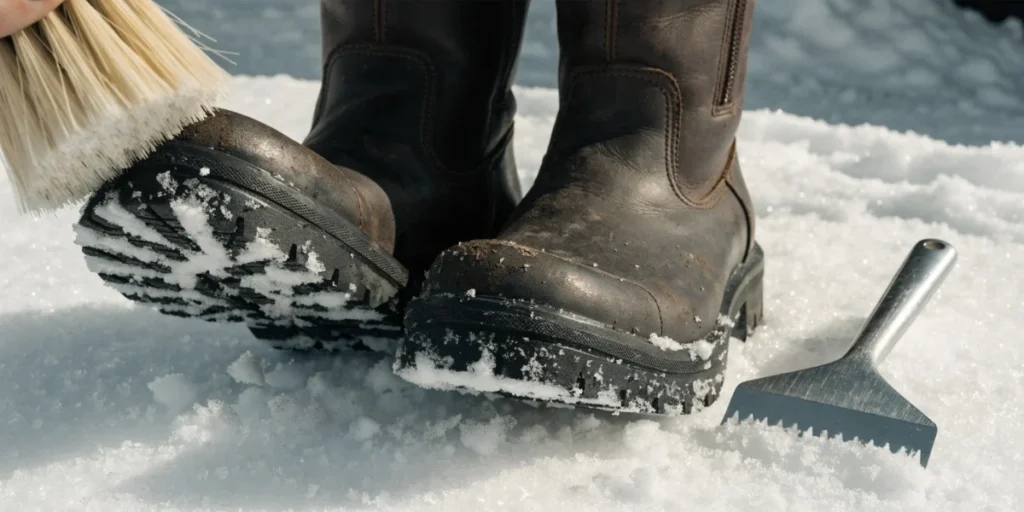
Even the best pair needs care. After every walk in snow or road salt, wipe the shoes with a damp cloth, let them dry naturally (not on a radiator), and treat them with waterproofing before the season. For leather, also use a cream that nourishes the material.
Store the pair in a dry, ventilated place and do not put it in a bag while it is damp. That way you avoid odor and mold. We wrote about leather care in more detail in a separate article on caring for leather goods.
Shoes from a Ukrainian Manufacturer: What to Pay Attention To
A climate with damp autumns, wet snow, and frost creates specific requirements, and local makers know them well. Shoes from a Ukrainian manufacturer are usually built for exactly these conditions: an outsole that does not harden in the cold, treated leather, and insulation that works at our temperatures.
Check a few things. First, how thoroughly the brand describes its materials and construction. Second, whether a temperature range is stated. Third, whether there is a size chart and reviews from real customers. In the UA Varte catalog you can compare offers from different makers and find the pair that suits you.
Another plus of local makers is service. If something goes wrong, arranging an exchange or a consultation is easier than with a large international brand.
Frequently Asked Questions
How do I choose winter shoes so my feet do not freeze?
How are autumn shoes different from winter ones?
Are waterproof shoes worth buying?
Which winter boots are best for the city?
Can I buy Ukrainian winter shoes with delivery abroad?
Conclusion
To choose winter shoes that will not let you down, define your conditions, check the insulation, upper, outsole, and size, and do not forget care. A good pair holds warmth, stays dry, and is safe on slippery ground. And shoes from a Ukrainian manufacturer add clear communication and adaptation to our climate.
Ready to find your pair for the season? Browse the UA Varte catalog, compare brands, and find the shoes that suit you. Do not miss our articles on Ukrainian shoe brands and on Ukrainian men’s clothing.
Go to the brand catalog → uavarte.com